Friday, 24 January 2014
WATCHMOJO.COM's Top 10 Animated Videos
I tend to agree with this well thought out listing, especially when you refer to it's terms of reference. There are many more that could of been listed in the highly commended section such as SLASH's Bad Rain and Devin Townsend's Bend it like Bender.
ENJOY

Sunday, 5 January 2014
The Legend that is Blind, deaf and smelly Bo
This is an extract from the a promo for a documentary featuring an unknown and strange character by the name of Bo Johnson. This remarkable discovery will ensure he will not be unknown for long.
Visit the official the site here for more detailed information including the documentary trailer featuring the only Blind deaf and smelly Bo recording in existence.

BLIND DEAF AND SMELLY BO (Blues legend)
MUSIC HISTORIAN WALTER .W.WALTON THROUGH SHIDOT PRODUCTIONS REVEALS WONDROUS INSIGHTS TO THE DISCOVERY OF A LOST DELTA BLUESMAN AND THE MEDICAL DISCOVERY THAT COULD CHANGE THE WORLD.
SOON TO BE RELEASED BY SHIDOT BOOKS
I walked up to the battered shack. It was the identical to the thirty or so that flanked either side of it. In what amounted to an Avenue of abandoned houses.
In this section of St Louis it was a common sight and was risking my life by just driving through here.
By my reckoning there was a man living here who had so far lived to the unlikely age of 115 years old.
I knocked on the heavy door and after about a minute I heard shuffling foot steps and then the door slowly creaked open.
I stood face to face with a battered old black man who looked more like a dried prune than a human being. His pupils were hidden behind large white cataracts
“Woz you want boy?” he asked in a raspy voice.
“Are you Bo Johnson… Oh MY LORD!…Is there a dead body in there?” and I retched and fell to my knees.
I had found my mark.
The man Blind deaf and smelly Bo was neither a known musician or a very good one. In fact it was terrible.
The Smithsonian shows no historical record of the recording and the name and the music are too bad to be dismissed as an early novelty recording.
This needed serious investigation.
Thus began the search for the missing Delta bluesman Blind deaf and smelly Bo Johnson.
For years I had heard rumours, whispers, footnotes in sidebars of the biographies of the great bluesman: Johnson (Robert and; Tommy) Howling Wolf, Muddy Waters, Charlie Paton. Sometimes a slight reference to an early musician who was so terrible he was an inspiration for others to be better. A man who by his abject failure as an entertainer made those who followed after him look so much better when using him as an opening act .
Using the powerful and extremely accurate research tool that is Google and the internet, as well as a massive University grant I went searching for this enigmatic legend.
I discovered an actual reference to the man and more importantly a name whilst going through Police records from Clarksdale Mississippi from the archives of the 1930s.
A long and arduous task but panning for gold is a practice of patience.
I discovered notes pertaining to an itinerate beggar who would deliberately get arrested so he had somewhere to sleep at night. Though he had many arrests it seems the local constabulary treated him as their own charity case and let him use the tool shed.
Strange practice for those times and attitudes.
His name: Bo Johnson, more commonly known as Blind deaf and smelly Bo.
A non du plume that was believed to be partially accurate but also to avoid confusion with another itinerant musician Blind Bo the Third.

An obligatory picture of Civil war black soldiers or slaves for reference as by US law for documentaries like this

A grainy old black and white photo for effect
 the original record label discovered by Walter.W.Walton at the State Library Mississippi
“I placed Bo against the wall and set up my portable acetate recording discs on a table. I had primed Bo with some cheap whiskey to settle his nerves mainly because he was in a slight agitated state as soon as he entered the hotel room. You see when he entered the room he seemed to draw in large breaths through his nose and this seemed to excite his senses. I took this as a good sign for a dynamic performance. Whilst setting up the recording devices Smelly Bo insisted on turning his chair towards the wall which was newly wall papered every attempt by myself to turn him back again led to a struggle and argument, in the end I moved the recording equipment to suit his position because coming in close proximity to Bo was an unpleasant affair.”
The recording of Blind deaf smelly Bo was a quick affair and done in one take it was removing Bo from the hotel room that became Whittlesea’s largest problem.
“After we had finished the first take I couldn’t seem to extract anymore out of Bo and decided what I had was enough it was only when I was ready to leave that I noticed he had stripped back pieces of the wall paper and was furiously licking the scarred exposed wall underneath.”
Hyram an educated man had heard of such behaviour in his travels and identified it as Wallpaper paste addiction or papyiusious. It came to as a shock to Whittlesea that when he had the words of the recording deciphered it was exactly what Blind deaf smelly Bo was singing about whilst he was recording”
F. Hyram Whittlesea left Bo in the hotel room with $20 and informed the desk clerk there was a coloured man trashing there room and left never seeing Bo Johnson again. Neither did he pay any royalties or commissions, not that any were made. In actual fact the recording of Blind deaf smelly Bo nearly cost F. Hyram Whittlesea his job and his career.
One of the main effect of papyiusious is blindness. This now explains the first of Bo Johnson’s nick names. He most likely formed his addiction in the 1910s when he was a teenager when paste licking was a popular but frowned upon habit much like glue and petrol sniffing in later years. Eventually many states removed the active ingredient that caused the addiction , the only state not having done so is Missouri where I discovered Blind deaf smelly Bo.
Other interesting snippets were found in my travels, one was handed to me by John Hammond noted Robert Johnson historian.
John has procured a pamphlet entitled “Truths of the Delta” apparently a legendary tell all that exposed the myths of Delta bluesmen. In it was reference to the old story of Robert and Tommy Johnson having sold their souls to the devil at the cross roads, the pamphlet says it’s all a big con and both men learnt their techniques from a man named Devlin Cross who owned a small roadhouse outside Clarksdale. It also goes on to mention Blind deaf smelly Bo as a brother of the two other Johnsons and that the blues were actually created by William Stovall III a descendant of the original plantation owner but gave it to the workers as a gift instead of a pay rise. And lastly that Heddy Leadbetter (Leadbelly) was actually a white man dressed as a Black and White Minstrel.
Of course this pamphlet was dismissed as rubbish but it was still interesting that Bo Johnson was mentioned.
MORE ON BLIND, DEAF AND SMELLY BO HERE.
Visit the official the site here for more detailed information including the documentary trailer featuring the only Blind deaf and smelly Bo recording in existence.

BLIND DEAF AND SMELLY BO (Blues legend)
MUSIC HISTORIAN WALTER .W.WALTON THROUGH SHIDOT PRODUCTIONS REVEALS WONDROUS INSIGHTS TO THE DISCOVERY OF A LOST DELTA BLUESMAN AND THE MEDICAL DISCOVERY THAT COULD CHANGE THE WORLD.
SOON TO BE RELEASED BY SHIDOT BOOKS
I walked up to the battered shack. It was the identical to the thirty or so that flanked either side of it. In what amounted to an Avenue of abandoned houses.
In this section of St Louis it was a common sight and was risking my life by just driving through here.
By my reckoning there was a man living here who had so far lived to the unlikely age of 115 years old.
I knocked on the heavy door and after about a minute I heard shuffling foot steps and then the door slowly creaked open.
I stood face to face with a battered old black man who looked more like a dried prune than a human being. His pupils were hidden behind large white cataracts
“Woz you want boy?” he asked in a raspy voice.
“Are you Bo Johnson… Oh MY LORD!…Is there a dead body in there?” and I retched and fell to my knees.
I had found my mark.
As a music historian I am often up for the challenge so it was a mild surprise when hunting through some old boxes in the State Library of Mississippi I came across a solitary thick acetate disc of a 1934 recording of Wallpaper Paste Blues by an unknown artist Blind deaf and smelly Bo.
When inspected it turned out to be the genuine article from that time in history when Alan Lomax and his team were scouring the Delta for indigenous folk music for the Smithsonian Institute. On further listening the recording was authentic for the period and done by a short lived division of the Edison Phonograph Company based in Boston.The man Blind deaf and smelly Bo was neither a known musician or a very good one. In fact it was terrible.
The Smithsonian shows no historical record of the recording and the name and the music are too bad to be dismissed as an early novelty recording.
This needed serious investigation.
Thus began the search for the missing Delta bluesman Blind deaf and smelly Bo Johnson.
For years I had heard rumours, whispers, footnotes in sidebars of the biographies of the great bluesman: Johnson (Robert and; Tommy) Howling Wolf, Muddy Waters, Charlie Paton. Sometimes a slight reference to an early musician who was so terrible he was an inspiration for others to be better. A man who by his abject failure as an entertainer made those who followed after him look so much better when using him as an opening act .
Using the powerful and extremely accurate research tool that is Google and the internet, as well as a massive University grant I went searching for this enigmatic legend.
I discovered an actual reference to the man and more importantly a name whilst going through Police records from Clarksdale Mississippi from the archives of the 1930s.
A long and arduous task but panning for gold is a practice of patience.
I discovered notes pertaining to an itinerate beggar who would deliberately get arrested so he had somewhere to sleep at night. Though he had many arrests it seems the local constabulary treated him as their own charity case and let him use the tool shed.
Strange practice for those times and attitudes.
His name: Bo Johnson, more commonly known as Blind deaf and smelly Bo.
A non du plume that was believed to be partially accurate but also to avoid confusion with another itinerant musician Blind Bo the Third.
An obligatory picture of Civil war black soldiers or slaves for reference as by US law for documentaries like this
Only one recording of Blind deaf and smelly Bo exists. A 1934 one-sided 78 rpm disc recorded by a travelling representative from the Edison Phonograph Company Boston division.
He like others of the time used popular coloured musicians to help sell new and cheaper mass produced record players to black population.
This salesman obviously didn’t understand the basic and primitive nature of the blues and though Blind, deaf and smelly Bo’s music was as savage as could be made it resulted in people returning their phonographs to the stores in droves and demanding refunds.
A grainy old black and white photo for effect
“I was only 22 at the time and had no idea what this music – if you call it that- was about.
I was raised on the classics and all this folk music sounded the same to me. Discordant and simple.”
F.Hyram Whittlesea an educated and cultural man who rose the corporate ladder to become head of RCA Victor Classics in the 1970s and the most important person in the telling of the story of the legacy of Blind deaf and smelly Bo Johnson.
F. Hyram Whittlesea wrote a self-published book of his memoirs in the 1980s before passing away peacefully in his eighties.
An act of vanity but an important record of fact and one of the reasons I eventually found the mythical blues man.
What follows are exclusive extracts from Whittlesea's self penned biography:
My Life in the Recording Industry and the Strange Thing and People I Encountered on the Way
F. Hyram Whittlesea Vanity Press 1982 used with permission from the Whittlesea Estate
“ I got the job just out of college with Edison Phonograph and they thought it would be an experience to blood me in the field, so they sent me from Boston to the state of Mississippi to record indigenous music so we could use them to sell back to the coloured folk in the plantation areas.
There was a large population down there and many of the folk were coming into some disposable income. It was predicted to be a growing market that needed capitalizing on”
“Smelly Bo was my fist contact. I drove into Clarksdale and noticed a crowd gathered around a man playing a guitar on a bench. They were showering him with coins as he played. It was – to my ears – a terrible racket but these people must of felt differently.
My first thought was – looks like I got my first recording artist.
His popularity was certain judging by the money he was making”
But as F. Hyram Whittlesea was to discover too late was the fact that the crowd were shop and stall owners bribing Blind deaf and smelly Bo to go away. It was discovered later this was Bo’s method of operation to earning money by setting up in a busy market place and driving customers away with his horrible sound and stench thus forcing the local traders to buy him off.
“when he had finished the crowd waited until he had collected all his coins and left before dispersing. I approached him and realized he was blind due to two large cataracts on his eyes. I heard his name called by one of locals when the shouted out to him “ I hope yous breaks your legs Blind deaf smelly Bo” at the time I thought it was some theatrical well wish, I now know better.
Well, I assumed he was deaf and was wondering how I could approach a man who was near impossible to communicate with? Then as I followed him down the road pondering this dilemma he turned and asked me “Why you following me boss?”
“You see people just assumed that Smelly Bo was deaf because he played so bad.
It was then with renewed confidence I approached him with my offer”
“It was during this close contact that I discovered the reason for Bo’s third nickname. It was like the man generated waves of stench from his person like nothing I had seen before or since. I man did not now the meaning of the word wash or soap”
“Bo was extremely interested in recording his song, I say song because he only knew one and made variations on it, but he was far more interested in recording in a hotel room, when I said it was a new hotel he became extremely excited.
The reason for this became obvious during the recording process.”

“I placed Bo against the wall and set up my portable acetate recording discs on a table. I had primed Bo with some cheap whiskey to settle his nerves mainly because he was in a slight agitated state as soon as he entered the hotel room. You see when he entered the room he seemed to draw in large breaths through his nose and this seemed to excite his senses. I took this as a good sign for a dynamic performance. Whilst setting up the recording devices Smelly Bo insisted on turning his chair towards the wall which was newly wall papered every attempt by myself to turn him back again led to a struggle and argument, in the end I moved the recording equipment to suit his position because coming in close proximity to Bo was an unpleasant affair.”
The recording of Blind deaf smelly Bo was a quick affair and done in one take it was removing Bo from the hotel room that became Whittlesea’s largest problem.
“After we had finished the first take I couldn’t seem to extract anymore out of Bo and decided what I had was enough it was only when I was ready to leave that I noticed he had stripped back pieces of the wall paper and was furiously licking the scarred exposed wall underneath.”
Hyram an educated man had heard of such behaviour in his travels and identified it as Wallpaper paste addiction or papyiusious. It came to as a shock to Whittlesea that when he had the words of the recording deciphered it was exactly what Blind deaf smelly Bo was singing about whilst he was recording”
F. Hyram Whittlesea left Bo in the hotel room with $20 and informed the desk clerk there was a coloured man trashing there room and left never seeing Bo Johnson again. Neither did he pay any royalties or commissions, not that any were made. In actual fact the recording of Blind deaf smelly Bo nearly cost F. Hyram Whittlesea his job and his career.
One of the main effect of papyiusious is blindness. This now explains the first of Bo Johnson’s nick names. He most likely formed his addiction in the 1910s when he was a teenager when paste licking was a popular but frowned upon habit much like glue and petrol sniffing in later years. Eventually many states removed the active ingredient that caused the addiction , the only state not having done so is Missouri where I discovered Blind deaf smelly Bo.
Other interesting snippets were found in my travels, one was handed to me by John Hammond noted Robert Johnson historian.
John has procured a pamphlet entitled “Truths of the Delta” apparently a legendary tell all that exposed the myths of Delta bluesmen. In it was reference to the old story of Robert and Tommy Johnson having sold their souls to the devil at the cross roads, the pamphlet says it’s all a big con and both men learnt their techniques from a man named Devlin Cross who owned a small roadhouse outside Clarksdale. It also goes on to mention Blind deaf smelly Bo as a brother of the two other Johnsons and that the blues were actually created by William Stovall III a descendant of the original plantation owner but gave it to the workers as a gift instead of a pay rise. And lastly that Heddy Leadbetter (Leadbelly) was actually a white man dressed as a Black and White Minstrel.
Of course this pamphlet was dismissed as rubbish but it was still interesting that Bo Johnson was mentioned.
MORE ON BLIND, DEAF AND SMELLY BO HERE.
Friday, 20 December 2013
MERRY CHRISTMAS 2013
It's been an eventful year, but then again aren't they all.
Thanks to those who regularly pop in to visit, which has been a few of you because we finally passed the 100K mark this year.
To celebrate the festive season and the pending new year here a few freebies to celebrate the holiday break.
Till the new year you can download a FREE digital version in pdf of Home Brew Vampire Bullets
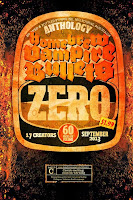
And till further notice you can download the full Game of Kings book in ePub for your digital reading device For absolutely nothing.

Thanks to those who regularly pop in to visit, which has been a few of you because we finally passed the 100K mark this year.
To celebrate the festive season and the pending new year here a few freebies to celebrate the holiday break.
Till the new year you can download a FREE digital version in pdf of Home Brew Vampire Bullets
And till further notice you can download the full Game of Kings book in ePub for your digital reading device For absolutely nothing.
Monday, 16 December 2013
DETHKLOK ‘Metalocalypse: The Doomstar Requiem A Klok Opera
Metalocalypse: The Doomstar Requiem A Klok Opera
Things have been pretty lean this year in the area of virtual,cartoon bands.
The promise that was PUSHER JONES never eventuated and Gorillaz are as good as sunk, even though there is apparently 2 albums at least in the boot left over from Plastic Beach. However,,,,, The good Ol' Boys from DETHKLOK have come up with the goods with this one hour special shown in October via Adult Swim
CATCH IT ALL HERE (or HEAR its only the music) looking forward to the DVD release.

Things have been pretty lean this year in the area of virtual,cartoon bands.
The promise that was PUSHER JONES never eventuated and Gorillaz are as good as sunk, even though there is apparently 2 albums at least in the boot left over from Plastic Beach. However,,,,, The good Ol' Boys from DETHKLOK have come up with the goods with this one hour special shown in October via Adult Swim
CATCH IT ALL HERE (or HEAR its only the music) looking forward to the DVD release.

Saturday, 7 December 2013
Home Brew Vampire Bullets Issue One. REVIEW
Home Brew Vampire Bullets Issue One.
Published by HBVB Editor: Garth Jones Available as
digital download: Scribd ( AUD$6.99 ) P.O.D thru BLURB (AUD$34.99)
Good previews available on both sites.
 I suppose it’s a hallmark of the age we live in, the need to have something quickly, not to draw things out. The collective attention span of the Internet is short, to use a polite word. Where comics and magazines were once seen in the deep dark past as ephemeral, one has to think what digital downloads are going to be seen as in the next decade or so. I like my books and magazines and comics/comix.
I'm a tactile kind of guy but I'm also a realist who knows that the best new stuff appears on the web first and production costs for something to buy at your favourite shop are prohibitive for the small publisher. So if you want to wait a couple of weeks and pay through the nose to hold a book in your hand or have it now for next to nothing and still hold it in your hand albeit a tablet. That is a choice you have to make sooner than later.
There is a point to this babble.
Home Brew Vampire Bullets released its 60 page anthology in late September to a warm reception. It whetted the appetite for what was to come and at US$1.99 in 4 different formats it was a bargain to boot. It lived up to its promise of a larrikin publication inspired by ozploitation movies, good ol’ pub rock and the great underground press of the 1970s. Expectation for issue one (I speak only for myself here) was very high. Now I've got it and read it, I wish I wasn't so impatient. A good slab of issue one appeared in the anthology and kind of spoiled it a bit, thinking about this I thought maybe the publishers could have spread some of the singular pieces over the next couple of issues perhaps?. That aside (and the download problem I had, gallantly and quickly rectified by HBVB main man Garth Jones) the magazine itself is a beautifully designed piece of work , with excellent colour and graphics that makes you feel you are holding something of value (and at $34.99 P.O.D …..well, you are!)
Garth Jones as helmsman has done a truly remarkable job to give it a unique feel. The collection of artists and writers will no doubt help move some copies but its whether the stories themselves and their length as continuous pieces will bring people back. Christian Read takes a giant slice of the writers credits, a well known and respected figure he keeps it simple with R.S HELL and PALE MAGIC, stories with a haunting/poltergeist type bent. It’s when we hit BABALON SHOKK with (that man again) Garth Jones that we get into some meaty story line that leaves you wanting more. It’s just a pity the majority of it was used to heavily push the anthology. The prose pieces where enjoyable, though DINGOES was hard to read on my iPad due to background colours. But Micca Delaney’s words (or where they Scott Frasers?) kept me jumping hurdles.
Christian Read's DEVIL IN AUSTRALIA and Nick Lewis’ THE AUSTRALIAN MOTOR ENTHUSIASTS GUIDE are as good a pieces of satire you'll see anywhere these days, both a highlight. The artist as story teller is carried by Scott Fraser in SHADOW RUMBLE, Simon Sherry with HEAVY ANGEL and Mathew Dunn's CEO.
The stand out pieces as sequentials are definitely MARALINGA , THE MANY HAROLD HOLTS OF SPACE AND TIME and BOLT These three stories will make me come back for more. The artwork in MARALINGA by Doug Holgate is a joy to look at and I found myself going over the landscape of a ruined Melbourne over and over again. The Ozploitation tag really hits high gear (and an R rating) with Mark Selan and Steve Martinez’s LUST OF CONVICTED VIXENS. This piece of sexy fun took me back to Slow Death Comix with Rand Holmes and Jaxon from the 1970s underground. Chuck in a few more stories about ignorant gangsters GUSTY SMYTHE and more devilish stories THE DEVIL IS IN THE DETAIL with some leftie political essays in some of the other written pieces (including some fun faux adverts) and you get a great mixture for a good solid read and at a 152 pages enough to keep you satisfied until Autumn when the next issue is due.
I know I'm greedy but I was expecting a bit more of the stories already featured in HBVB ZERO.
Published by HBVB Editor: Garth Jones Available as
digital download: Scribd ( AUD$6.99 ) P.O.D thru BLURB (AUD$34.99)
Good previews available on both sites.

I'm a tactile kind of guy but I'm also a realist who knows that the best new stuff appears on the web first and production costs for something to buy at your favourite shop are prohibitive for the small publisher. So if you want to wait a couple of weeks and pay through the nose to hold a book in your hand or have it now for next to nothing and still hold it in your hand albeit a tablet. That is a choice you have to make sooner than later.
There is a point to this babble.
Home Brew Vampire Bullets released its 60 page anthology in late September to a warm reception. It whetted the appetite for what was to come and at US$1.99 in 4 different formats it was a bargain to boot. It lived up to its promise of a larrikin publication inspired by ozploitation movies, good ol’ pub rock and the great underground press of the 1970s. Expectation for issue one (I speak only for myself here) was very high. Now I've got it and read it, I wish I wasn't so impatient. A good slab of issue one appeared in the anthology and kind of spoiled it a bit, thinking about this I thought maybe the publishers could have spread some of the singular pieces over the next couple of issues perhaps?. That aside (and the download problem I had, gallantly and quickly rectified by HBVB main man Garth Jones) the magazine itself is a beautifully designed piece of work , with excellent colour and graphics that makes you feel you are holding something of value (and at $34.99 P.O.D …..well, you are!)
Garth Jones as helmsman has done a truly remarkable job to give it a unique feel. The collection of artists and writers will no doubt help move some copies but its whether the stories themselves and their length as continuous pieces will bring people back. Christian Read takes a giant slice of the writers credits, a well known and respected figure he keeps it simple with R.S HELL and PALE MAGIC, stories with a haunting/poltergeist type bent. It’s when we hit BABALON SHOKK with (that man again) Garth Jones that we get into some meaty story line that leaves you wanting more. It’s just a pity the majority of it was used to heavily push the anthology. The prose pieces where enjoyable, though DINGOES was hard to read on my iPad due to background colours. But Micca Delaney’s words (or where they Scott Frasers?) kept me jumping hurdles.
Christian Read's DEVIL IN AUSTRALIA and Nick Lewis’ THE AUSTRALIAN MOTOR ENTHUSIASTS GUIDE are as good a pieces of satire you'll see anywhere these days, both a highlight. The artist as story teller is carried by Scott Fraser in SHADOW RUMBLE, Simon Sherry with HEAVY ANGEL and Mathew Dunn's CEO.
The stand out pieces as sequentials are definitely MARALINGA , THE MANY HAROLD HOLTS OF SPACE AND TIME and BOLT These three stories will make me come back for more. The artwork in MARALINGA by Doug Holgate is a joy to look at and I found myself going over the landscape of a ruined Melbourne over and over again. The Ozploitation tag really hits high gear (and an R rating) with Mark Selan and Steve Martinez’s LUST OF CONVICTED VIXENS. This piece of sexy fun took me back to Slow Death Comix with Rand Holmes and Jaxon from the 1970s underground. Chuck in a few more stories about ignorant gangsters GUSTY SMYTHE and more devilish stories THE DEVIL IS IN THE DETAIL with some leftie political essays in some of the other written pieces (including some fun faux adverts) and you get a great mixture for a good solid read and at a 152 pages enough to keep you satisfied until Autumn when the next issue is due.
I know I'm greedy but I was expecting a bit more of the stories already featured in HBVB ZERO.
 |
| Doug Holgate's MARALINGA artwork |
 |
| Simon Sherry's Heavy Angel artwork in colour |
 |
| Mathew Dunn's CEO artwork |
Saturday, 30 November 2013
Snappy the Little Crocodile
Schnappi akkurat Krokodil (Snappy the Little Crocodile) is a Swedish children's cartoon character.
The introductory song "Schnappi, das kleine Krokodil" became an Internet hit before it reached number 1 on the German charts in January 2005, and was widely popular in other European countries as well, (Popularized byJamba!) topping the singles charts in Belgium, Austria, the Netherlands, Norway, Sweden and Switzerland for several weeks.
Schnappi was a character in a popular animated German children's TV show called Die Sendung mit der Maus (The Show With the Mouse). In the cartoon in which the character appeared, Schnappi is seen singing a song about life in Egypt. That song, which is sung in German, has a very catchy tune and simple lyrics.
The song, which first appeared in the Sendung mit der Maus show in 2001, was written by Iris Gruttmann and performed by her then-six year old niece, Joy. In 2004 Schnappi became a hit on the Internet. It got more and more popular while playing on the Internetradio RauteMusik. The moderators and listeners often played that song before it got released on CD In December of that year, the song Schnappi, das kleine Krokodil was released on CD. The single reached #1 on the German Pop-Charts on 3 January 2005. A bootleg translation into English was recorded and released on the Internet on the 20 February 2005 by the Bronx artist DJ Damien. Despite being an unofficial cover, this version was made available on the official Schnappi website.
Other translations by collaborations involving DJ Damien include a French version "Crocky le Petit Crocodile", Lithuanian "Šnapis mažas klokodilas" and a Japanese version "Togetogeshi, chiisai wani" Alternative versions of the song - varying from simple remixes of the basic vocal track, to a full cover version by Belgian techno group Dynamite - were also at numbers seven and ten in Belgium, and at number two in the Netherlands.
source: Wikipedia and my kids who own this horror
The introductory song "Schnappi, das kleine Krokodil" became an Internet hit before it reached number 1 on the German charts in January 2005, and was widely popular in other European countries as well, (Popularized byJamba!) topping the singles charts in Belgium, Austria, the Netherlands, Norway, Sweden and Switzerland for several weeks.
Schnappi was a character in a popular animated German children's TV show called Die Sendung mit der Maus (The Show With the Mouse). In the cartoon in which the character appeared, Schnappi is seen singing a song about life in Egypt. That song, which is sung in German, has a very catchy tune and simple lyrics.
The song, which first appeared in the Sendung mit der Maus show in 2001, was written by Iris Gruttmann and performed by her then-six year old niece, Joy. In 2004 Schnappi became a hit on the Internet. It got more and more popular while playing on the Internetradio RauteMusik. The moderators and listeners often played that song before it got released on CD In December of that year, the song Schnappi, das kleine Krokodil was released on CD. The single reached #1 on the German Pop-Charts on 3 January 2005. A bootleg translation into English was recorded and released on the Internet on the 20 February 2005 by the Bronx artist DJ Damien. Despite being an unofficial cover, this version was made available on the official Schnappi website.
Other translations by collaborations involving DJ Damien include a French version "Crocky le Petit Crocodile", Lithuanian "Šnapis mažas klokodilas" and a Japanese version "Togetogeshi, chiisai wani" Alternative versions of the song - varying from simple remixes of the basic vocal track, to a full cover version by Belgian techno group Dynamite - were also at numbers seven and ten in Belgium, and at number two in the Netherlands.
source: Wikipedia and my kids who own this horror
Saturday, 2 November 2013
Anthrax, bunnies, Frenchmen and beer. A sidetracking journey through our colonial years
Recently I came across a post by the Mt Dandenong & District Historical Society on Facebook.
One of their readers was intrigued by a derelict building that they often passed on Belgrave –Hallam Rd. South of Wellington Rd.
The call was put out if anyone had any history to share. As is often the case with this site, a multitude of followers gave what snippets they knew which culminated in a post of a 1975 newspaper article referring to an anthrax outbreak in a Knackery in Narre Warren North, where four men were hospitalized and many greyhounds kept on the premises were in danger of being put down. The owner of the dogs, a butcher in Prahran was also admitted and had his shop fumigated and all his stock destroyed.
It wasn’t until a Mr. Adam O’Brien posted on behalf of his father to clarify some the situation. The building was the slaughter house the last surviving structure of O’Connor’s Abattoir that operated in the area up until the outbreak.
According to Mr. O’Brien: “There was an animal that came in on a truck with anthrax on it, this was detected and the government declared the site contaminated. They destroyed all fences, clothes, pens etc by burning. They limed the paddocks and pens. The government compulsory acquired everything and forced O’connor’s relocate to Pakenham….. After 29 days of quarantine another animal died and the government gave up and closed the site indefinitely.”
Mr O’Brien also confirmed the news article mentioned earlier was not related to the property that was being discussed as O’Conner’s was an Abatoir, not a Knackery. (As a side note if you’re wondering what happed to the business? G&K O’Conner flourished in Pakenham and is now the largest meat exporter in Australia as well as one the biggest employers in the area.) This put my focus on the news article.
Though the articles reported were small and not as alarmists as one would have thought, much of the relating reports concentrated not on the anthrax itself but on the health of dogs at the Sandown racetrack and a simmering feud between the Agricultural and Health departments about who would be best suited to control and contain such outbreaks, as it was only the year before that the State Government had taken responsibility of Knackeries away from the Health Department, who now accused the Agricultural Department of putting different priorities on situations.
I thought that a bit odd and I could find no more mention of the incident after an exhaustive Internet search. I did establish that these incidents were the last known anthrax outbreaks in the Melbourne area.
Most people these days would associate anthrax with the September 11 bombings where there was a spate of envelopes containing white powder believed to be anthrax being sent to Government officials in various countries, causing quite a panic and plenty of news media coverage. Because anthrax is one of the easiest diseases to contain and use as biological weapons it has made it a very popular subject as a storyline in television and movies since the turn of the century.
Anthrax is one of those diseases from the past such as small pox, rabies, typhoid, cholera and polio that mankind has managed to control and in many cases irradiate. Anthrax is basically a spore and can remain dormant in harsh conditions for decades and in some cases centuries.. When these spores are inhaled, ingested, or come into contact with a skin lesion on a host, they may become reactivated and multiply rapidly.
The disease effects both humans and livestock
Because of its long lifespan the soil borne variety can remain at the burial sites of animals killed by anthrax for many decades. Disturbed grave sites of infected animals have caused reinfection over 70 years after the animal's interment. I learnt that anthrax has been an ongoing concern in Australia for nearly 170 years. It had first been identified near Sydney in 1847, but then it was termed mistakenly as Cumberland disease. Australian stock breeders had become less cautious as the colonies grew, with livestock becoming less of a valuable commodity and ships arriving from Europe becoming more plentiful and faster. With these ships came imports. Human infection has been attributed to handling the hides and pelts of infected animals to the possession of drum skins and shaving and hair brushes. Massive outbreaks came in the 1880s due to imported fertilizer such as dusted blood and bone imported from the sub-Continent. Losses were sometimes catastrophic. It is recorded that in 1885 on one combined property - comprising 220,000 sheep, nearly 5,000 cattle and 600 horses - a total of 42,000 sheep, 500 cattle and 60 horses died from anthrax. At the height of the epidemic, 500 sheep and 40 cattle were found dead in one day. Graziers concealed knowledge of their losses for fear of depreciating the value of their land and not being able to sell stock.
A number of lay remedies, including purgatives and pasturing sheep with goats, were tried with little effect. Luckily it was around this time (1881) the great French micro biologist Louis Pasteur developed the first effective vaccine against Anthrax. Pasteur was a brilliant man and responsible for many great discoveries, his previous research showed that the growth of micro-organisms was responsible for spoiling beverages, such as beer, wine and milk. With this established, he invented a process in which liquids such as milk were heated to kill most bacteria and moulds already present within them.
His work also helped create the vaccines for rabies.
Because of his study in germs, Pasteur encouraged doctors to sanitize their hands and equipment before surgery. Prior to this, few doctors or their assistants practiced these procedures, making way for modern surgical practices. But in 1887 Louis Pasteur had suffered a second stroke and was recovering, Pasteur had dedicated himself to building The Pasteur Institute to continue his commitment to basic research and its practical applications but its establishment and ill health had left him short of funds. He needed a large injection of cash to finish his dreams.
The potential answer to Pasteur’s problems began a bit over 25 years earlier. In 1859 one of Australia’s biggest environmental disasters was playing out. At his property outside Geelong, British-born pastoralist Thomas Austin released twenty-four rabbits, five hares, and seventy-two partridges into the wild. Austin, who hated the local flora and fauna, wanted to introduce “a touch of home”. By the mid1880, the rabbit population had exploded and become a plague, rabbits numbering up to billion know had spread across the country from South Australia to Queensland and all points in between. In 1887 with the problem now extreme, New South Wales premier Sir Henry Parkes sat down with his Rabbit Minister and devised an international competition with of prize of £25,000 for a microbiological remedy to the rabbit plague, to be advertised around the world. In Paris Pasteur’s wife alerted him to the completion, she knew Pasteur’s stroke had been brought on by the money worries of building his Institute and Sir Henry Parkes’ competition prize, the equivalent of $10 million in today’s money, would enable the eminent scientist to equip and staff his institute. Pasteur was certain that he had the winning remedy, chicken cholera, which he had seen swiftly kill rabbits in earlier experiments. Pasteur full of confidence dispatched his nephew and protégé Adrien Loir as part of a three-member team to prove that his remedy would solve the Australasian rabbit plague, and claim the prize, convinced that it should only take four to six weeks for Loir to satisfy the competition judges before setting off home with the desperately needed prize money. But it would not be that simple. On arrival to Melbourne, Loir learned that the competition’s terms of reference required entries to be tested for 12 months.
But Pasteur had only sent his team to Australia with enough money for six weeks. Just as it seemed he might have to leave Australia unrewarded, fate took a hand. Local brewer Thomas Aitken was about to set off for Denmark, to learn the secret of Pasteur’s yeast cultivation techniques that had enabled the brewers of Carlsberg Beer to prosper. Hearing that Pasteur’s nephew was in town, Aitken offered to pay Loir to teach his staff the Pasteur methodology. Loir agreed, and spent two weeks at the Victoria Brewery. As a result, Victoria Bitter beer would become Australia’s top-selling lager, and, with Aitken’s fee of £250 Loir had enough money to keep his team in Australia for a year. Loir’s time in Australia held many highs and lows. His attempt to win the rabbit competition was hampered from the start. Two of the judges were major barbed wire importers, wanting to make rabbit-proof fences compulsory. Another judge was president of a poultry farmers’ association. None wanted Pasteur’s chicken cholera employed against Australia’s rabbits, because they considered it bad for business – their business. To make matters worse, two other influential judges, both Doctors, were students of Louis Pasteur’s greatest scientific rival and harshest critic, Germany’s Robert Koch.
Even his chicken cholera research was copied by another researcher, Oscar Katz, once again a student of Koch. Whilst waiting for the trial period to elapse Loir began researching ‘Cumberland disease’ the disease killing so much livestock in Australia at the time and discovering it to be actually anthrax. Lori had previously worked on a vaccine against anthrax, and proposed a large scale anthrax vaccine trial to the NSW government. Colonial farmers lined up to pay for Pasteur’s vaccine, and stock losses to anthrax quickly declined. To produce the vaccine each summer, Loir set up a Pasteur Institute in the Rodd Island facility on the Parramatta River , enabling him ultimately to send Pasteur more money than even the rabbit prize represented. As for the somewhat influenced Rabbit Commission, it ended up recommending against awarding the prize to anyone, opting for rabbit-proof fences. Misrepresenting the findings of its own ‘expert’, Oscar Katz, the commission dismissed Pasteur’s entry by claiming that chicken cholera did not already exist in Australia, and that its introduction would pose an unacceptable risk to poultry and native birds. Adrien Lori loved Australia but unfortunately his young French wife – who didn’t speak English , whom he married on a whirl wind return to France did not , so he left never to return. Living a full life researching all over the world.
In 1897 it was established Chicken Cholera had existed in Australia, though the findings were vehemently attacked by Rabbit Commission members determined not to have their reputations undermined.
As for the anthrax break out in February 1975 I could find little to nothing to pin point its location so I drove past the old O’Conner site as that was much easier to find.
Guess what I saw running all around it.
Yep, rabbits.
Sources: Science, Sex &; Sabotage Stephen Dando-Collins Australian Heritage June 2010
The Age 26+27 Feb 1975
SMH 26 Feb 1975
Mt Dandenong & District Historical Society Facebook
History of Veterinary Health KL Hughes 1991
http://www.oie.int/doc/ged/D8618.PDF Wikipedia: Louis Pasteur / Anthrax
Anthrax in animals DPI pub:Ag0802 Jan 2003
Originally printed in the BBCN December 2013 issue
One of their readers was intrigued by a derelict building that they often passed on Belgrave –Hallam Rd. South of Wellington Rd.
 |
| The building on the side of the road |
The call was put out if anyone had any history to share. As is often the case with this site, a multitude of followers gave what snippets they knew which culminated in a post of a 1975 newspaper article referring to an anthrax outbreak in a Knackery in Narre Warren North, where four men were hospitalized and many greyhounds kept on the premises were in danger of being put down. The owner of the dogs, a butcher in Prahran was also admitted and had his shop fumigated and all his stock destroyed.
It wasn’t until a Mr. Adam O’Brien posted on behalf of his father to clarify some the situation. The building was the slaughter house the last surviving structure of O’Connor’s Abattoir that operated in the area up until the outbreak.
According to Mr. O’Brien: “There was an animal that came in on a truck with anthrax on it, this was detected and the government declared the site contaminated. They destroyed all fences, clothes, pens etc by burning. They limed the paddocks and pens. The government compulsory acquired everything and forced O’connor’s relocate to Pakenham….. After 29 days of quarantine another animal died and the government gave up and closed the site indefinitely.”
Mr O’Brien also confirmed the news article mentioned earlier was not related to the property that was being discussed as O’Conner’s was an Abatoir, not a Knackery. (As a side note if you’re wondering what happed to the business? G&K O’Conner flourished in Pakenham and is now the largest meat exporter in Australia as well as one the biggest employers in the area.) This put my focus on the news article.
Though the articles reported were small and not as alarmists as one would have thought, much of the relating reports concentrated not on the anthrax itself but on the health of dogs at the Sandown racetrack and a simmering feud between the Agricultural and Health departments about who would be best suited to control and contain such outbreaks, as it was only the year before that the State Government had taken responsibility of Knackeries away from the Health Department, who now accused the Agricultural Department of putting different priorities on situations.
I thought that a bit odd and I could find no more mention of the incident after an exhaustive Internet search. I did establish that these incidents were the last known anthrax outbreaks in the Melbourne area.
Most people these days would associate anthrax with the September 11 bombings where there was a spate of envelopes containing white powder believed to be anthrax being sent to Government officials in various countries, causing quite a panic and plenty of news media coverage. Because anthrax is one of the easiest diseases to contain and use as biological weapons it has made it a very popular subject as a storyline in television and movies since the turn of the century.
Anthrax is one of those diseases from the past such as small pox, rabies, typhoid, cholera and polio that mankind has managed to control and in many cases irradiate. Anthrax is basically a spore and can remain dormant in harsh conditions for decades and in some cases centuries.. When these spores are inhaled, ingested, or come into contact with a skin lesion on a host, they may become reactivated and multiply rapidly.
The disease effects both humans and livestock
Because of its long lifespan the soil borne variety can remain at the burial sites of animals killed by anthrax for many decades. Disturbed grave sites of infected animals have caused reinfection over 70 years after the animal's interment. I learnt that anthrax has been an ongoing concern in Australia for nearly 170 years. It had first been identified near Sydney in 1847, but then it was termed mistakenly as Cumberland disease. Australian stock breeders had become less cautious as the colonies grew, with livestock becoming less of a valuable commodity and ships arriving from Europe becoming more plentiful and faster. With these ships came imports. Human infection has been attributed to handling the hides and pelts of infected animals to the possession of drum skins and shaving and hair brushes. Massive outbreaks came in the 1880s due to imported fertilizer such as dusted blood and bone imported from the sub-Continent. Losses were sometimes catastrophic. It is recorded that in 1885 on one combined property - comprising 220,000 sheep, nearly 5,000 cattle and 600 horses - a total of 42,000 sheep, 500 cattle and 60 horses died from anthrax. At the height of the epidemic, 500 sheep and 40 cattle were found dead in one day. Graziers concealed knowledge of their losses for fear of depreciating the value of their land and not being able to sell stock.
A number of lay remedies, including purgatives and pasturing sheep with goats, were tried with little effect. Luckily it was around this time (1881) the great French micro biologist Louis Pasteur developed the first effective vaccine against Anthrax. Pasteur was a brilliant man and responsible for many great discoveries, his previous research showed that the growth of micro-organisms was responsible for spoiling beverages, such as beer, wine and milk. With this established, he invented a process in which liquids such as milk were heated to kill most bacteria and moulds already present within them.
His work also helped create the vaccines for rabies.
Because of his study in germs, Pasteur encouraged doctors to sanitize their hands and equipment before surgery. Prior to this, few doctors or their assistants practiced these procedures, making way for modern surgical practices. But in 1887 Louis Pasteur had suffered a second stroke and was recovering, Pasteur had dedicated himself to building The Pasteur Institute to continue his commitment to basic research and its practical applications but its establishment and ill health had left him short of funds. He needed a large injection of cash to finish his dreams.
 |
| Sydney Morning Herald 17- Sept 1887 |
The potential answer to Pasteur’s problems began a bit over 25 years earlier. In 1859 one of Australia’s biggest environmental disasters was playing out. At his property outside Geelong, British-born pastoralist Thomas Austin released twenty-four rabbits, five hares, and seventy-two partridges into the wild. Austin, who hated the local flora and fauna, wanted to introduce “a touch of home”. By the mid1880, the rabbit population had exploded and become a plague, rabbits numbering up to billion know had spread across the country from South Australia to Queensland and all points in between. In 1887 with the problem now extreme, New South Wales premier Sir Henry Parkes sat down with his Rabbit Minister and devised an international competition with of prize of £25,000 for a microbiological remedy to the rabbit plague, to be advertised around the world. In Paris Pasteur’s wife alerted him to the completion, she knew Pasteur’s stroke had been brought on by the money worries of building his Institute and Sir Henry Parkes’ competition prize, the equivalent of $10 million in today’s money, would enable the eminent scientist to equip and staff his institute. Pasteur was certain that he had the winning remedy, chicken cholera, which he had seen swiftly kill rabbits in earlier experiments. Pasteur full of confidence dispatched his nephew and protégé Adrien Loir as part of a three-member team to prove that his remedy would solve the Australasian rabbit plague, and claim the prize, convinced that it should only take four to six weeks for Loir to satisfy the competition judges before setting off home with the desperately needed prize money. But it would not be that simple. On arrival to Melbourne, Loir learned that the competition’s terms of reference required entries to be tested for 12 months.
But Pasteur had only sent his team to Australia with enough money for six weeks. Just as it seemed he might have to leave Australia unrewarded, fate took a hand. Local brewer Thomas Aitken was about to set off for Denmark, to learn the secret of Pasteur’s yeast cultivation techniques that had enabled the brewers of Carlsberg Beer to prosper. Hearing that Pasteur’s nephew was in town, Aitken offered to pay Loir to teach his staff the Pasteur methodology. Loir agreed, and spent two weeks at the Victoria Brewery. As a result, Victoria Bitter beer would become Australia’s top-selling lager, and, with Aitken’s fee of £250 Loir had enough money to keep his team in Australia for a year. Loir’s time in Australia held many highs and lows. His attempt to win the rabbit competition was hampered from the start. Two of the judges were major barbed wire importers, wanting to make rabbit-proof fences compulsory. Another judge was president of a poultry farmers’ association. None wanted Pasteur’s chicken cholera employed against Australia’s rabbits, because they considered it bad for business – their business. To make matters worse, two other influential judges, both Doctors, were students of Louis Pasteur’s greatest scientific rival and harshest critic, Germany’s Robert Koch.
Even his chicken cholera research was copied by another researcher, Oscar Katz, once again a student of Koch. Whilst waiting for the trial period to elapse Loir began researching ‘Cumberland disease’ the disease killing so much livestock in Australia at the time and discovering it to be actually anthrax. Lori had previously worked on a vaccine against anthrax, and proposed a large scale anthrax vaccine trial to the NSW government. Colonial farmers lined up to pay for Pasteur’s vaccine, and stock losses to anthrax quickly declined. To produce the vaccine each summer, Loir set up a Pasteur Institute in the Rodd Island facility on the Parramatta River , enabling him ultimately to send Pasteur more money than even the rabbit prize represented. As for the somewhat influenced Rabbit Commission, it ended up recommending against awarding the prize to anyone, opting for rabbit-proof fences. Misrepresenting the findings of its own ‘expert’, Oscar Katz, the commission dismissed Pasteur’s entry by claiming that chicken cholera did not already exist in Australia, and that its introduction would pose an unacceptable risk to poultry and native birds. Adrien Lori loved Australia but unfortunately his young French wife – who didn’t speak English , whom he married on a whirl wind return to France did not , so he left never to return. Living a full life researching all over the world.
In 1897 it was established Chicken Cholera had existed in Australia, though the findings were vehemently attacked by Rabbit Commission members determined not to have their reputations undermined.
As for the anthrax break out in February 1975 I could find little to nothing to pin point its location so I drove past the old O’Conner site as that was much easier to find.
Guess what I saw running all around it.
Yep, rabbits.
Sources: Science, Sex &; Sabotage Stephen Dando-Collins Australian Heritage June 2010
The Age 26+27 Feb 1975
SMH 26 Feb 1975
Mt Dandenong & District Historical Society Facebook
History of Veterinary Health KL Hughes 1991
http://www.oie.int/doc/ged/D8618.PDF Wikipedia: Louis Pasteur / Anthrax
Anthrax in animals DPI pub:Ag0802 Jan 2003
Originally printed in the BBCN December 2013 issue
Subscribe to:
Posts (Atom)
-
 Ever wondered what your favorite song was about? Probably not, which is good because a nice melody and tune are far more enticing than w...
 -
 ALTERNATE WORLDS- Comic book shop: A historical journey. My first visit to ALTERNATE WORLDS was a pleasant surprise on so many levels...
 -
 This one was a no brainer combining two great loves - music and comic art. This of course is just a small sample and hopefully I'll bui...