Saturday, 1 August 2020

Palisades Del Rey

Palisades Del Rey 

This fascinated me when I first discovered it while jumping down an interweb rabbit hole.
While I got a lot of this information from digging on the net.
Part ONE of Two
In the early 1920's in Los Angeles n exclusive beachside housing estate was created for the well off and famous. In the course of just 40 years, it became deserted. This is the story of how Los Angele's growth turned an area consisting of some of the city's most expensive and sought after properties into a ghost town.


Just next to famous Venice Beach approximately 21 kilometres from the City centre and standing between the beach and Los Angelas International Airport (LAX) there once stood the beach front suburban paradise of Palisades Del Rey.
Today it is a grid of empty streets surrounded by link fencing. To trespass means arrest by police or airport security. 
Palisades del Rey (aka Surfridge) was a beachfront city developed in the early 1920’s. by the famed Dickinson & Gillespie Co.
At the turn of the century, Palisades Del Rey( known now as Playa Del Rey) is Spanish for King’s Beach.


A beautiful coastline, oil-rich soil and miles of unspoiled dunes made it a destination for real estate developers,oil diggers and tourists.
In 1921, the firm Dickinson & Gillespie purchased a three-mile stretch they would develop into Palisades Del Rey,
Surfridge Estates, Del Rey Hills and Surfridge. All in the district of Los Angeles County, California and under the direction of entrepreneur Fritz Burns.


Even though the estate - at the time - Had a field of oil derricks less than a mile to the North and a
Wastewater treatment plant to the immediate South.


Fritz regularly bragged that he would be a millionaire by age 30. Part-politician, part-P.T. Barnum, all salesman,he actually achieved that goal, thanks to his real estate investments, his pioneering professional football team,
the Los Angeles Buccaneers, and his command of the sales force that subdivided and sold the lots in Playa Del Rey.


The area was beautiful and conveniently located, and the hills…
The rolling hills are the result of ancient, wind-blown, compacted sand dunes which rise up to 125 feet above sea level
originally called and often referred to as The Del Rey Hills or “The Bluffs”.


These dunes run parallel to the coast line, from Playa del Rey, all the way south to Palos Verdes.
It lay at an elevation of 135 feet (41 m).


The perfect vista point and high above the water for exclusive oceanside living.


Real estate developer Fritz Burns, a mastermind behind the project imported palm trees to flank the entrance.
He put up his signs and businesses started booming.


It was an easy sell; the rich and famous flocked to Surfridge for a piece of paradise.


And they began to build cottages, houses and even mansions on the beach.


The seclusion of the developments appealed to actors and directors and all of the
houses in this area were custom built.


Many of the beach homes owned by Hollywood stars, actors and producers.


Hollywood royalty that invested in the area included William de Mille, Cecil B. DeMille,
Charles Bickford and Mel Blanc and others.


In the early days, actress Mae Murray built a custom-built, enormous, ocean front property at
64th Street & Ocean Front Walk in Playa del Rey (a stretch of coastal land near today’s LAX airport).
This is where she held lavish parties that lasted for days.


A southern portion of Playa del Rey became known as Surfridge.
Decades before celebrities were spotted on the bluffs of Malibu, stars of the silver screen took retreat
in the dunes above Dockweiler.


A neighbouring area east of this playground was also attracting the spotlight. Mines Field, a 640-acre parcel of farmland,
had become a venue for people to enjoy air races and shows that were popular in the ‘20s and ‘30s.


A small airfield opened to the east of Surfridge in 1928.


It became a popular location for residents to see air shows. These events drew large crowds.
Along with participants Charles Lindbergh and Amelia Earhart, attendees included Marion Davies,
Will Rogers, Bill Boeing and Donald Douglas. It was an exciting moment in 1928 when the
Los Angeles City Council selected Mines Field as the site of a new airport for the city, and
the farmland was transformed into dirt landing strips.


Surfridge was developed in the 1920s and 1930s as “an isolated playground for the wealthy.”
In 1925 the developer held a contest to name the neighbourhood and awarded the $1,000 prize to an
Angeleno who submitted “Surfridge.”
The Los Angeles Times wrote that Surfridge was chosen “due to its brevity, euphony,
ease of pronunciation … but above all because it tells the story of this new wonder city.”
Salesmen pitched tents on the sand dunes and sold lots for $50 down and 36 monthly payments of $20.
House exteriors could only be stucco, brick or stone; frame structures were prohibited.


Development was slowed by the onset of the Great Depression, but in the early 1930s
the wealthy began to buy lots to build large homes.


Surfridge flourished from the late ‘30s through the late ‘50s. Dickinson & Gillespie suffered as a result of
the Great Depression and sold their interests to the bank.


FRITZ BURNS’ HOUSE, 200 WATERLOO STREET (LATER RENAMED WATERVIEW), PLAYA DEL REY.
Fritz Burns lost his own mansion and lived in a tent on the beach until he rebuilt his fortune.
The growing number of commercial flights into Los Angeles following after World War II meant a
higher number of planes flying low over Surfridge.
Many residents learned to coexist with the noise from propeller planes,
but jet engines were impossible to ignore.


                     https://www.facebook.com/SouthBayHistory
          

Friday, 3 July 2020

Tales from the Bunker


Tales from the Bunker - How I survived the pandemic of 2020 (so far)


originally printed in the BBCN Issue 289 June 2020

Monday, 1 June 2020

The Basin, another part of history.

I live at the edge of the metro area in the outer eastern suburbs of Melbourne, at the foothills of the Dandenongs. A small mountain range in our very flat state. It's a lovely green area, protected by the government as proclaimed State forests. Up the road from my house, literally across the street is the suburb named The Basin. On the extreme edge of the municipal council of Knox, it prides itself on being quiet and having a village-like appeal. It is the gateway to the Dandenongs on the western side and has fought successfully to stifle large scale development and is popular amongst day-trippers and cyclists, who flood the cafes and parks on the weekends. The Basin is also one of the earliest settled areas in Melbourne, the hills being a popular place for people to escape the heat and smalls of the ever-growing Melbourne due to the gold rush of the middle 1800s.
When it's smaller neighbour Boronia received a train station in the 1920s development in the Basin halted as proximity to the new station and easy access to the city meant a boom in residential and industry in Boronia which also was a flatter and easier terrain to build.
Once a place of grand mansions and sawmills, the Basin these days is a quiet hamlet that likes everyone to think nothing happens there. Its local historian Rick Coxhill has written and documented a wonderful book that is available online that explores the rise and decline of the suburb over the course of 150 years. There is however some glossing over of certain places and people in Mister Coxhill's book that never seem to be talked about. That's where I come in.
I have contributed a few articles that go against the grain of the "keep everything happy" policy of the local community paper. It also seems the "past is the past" but only if it's not pleasant.
So here are some links to stories that weren't considered "happy" enough for the publication and some other stuff I discovered researching.
First up:
The Bayswater Boys Home   The best thing that happened- in terms of the Basin- is that this horrible institution that has been situated a short walk from the village centre was named after Bayswater the closest railway station at the time. That way the town could just pretend (even though it has existed for over a century) never existed in the Basin. Run by the Salvation Army it has been the subject of both State and Federal Commissions into child abuse.

Rod Braydon's recollections of his youth in the Bayswater Boys Home.

That time a Basin firefighter was the one lighting the fires  When I submitted this, it was the middle of the fire season and it was considered ill-timed. I agreed but when the editor said that there was a conflicting opinion on the result of the case towards the charged, even though it was proved forensically that he caused the blaze AND he confessed to his crime.


Wicks Reserve. The quiet reserve between both the town centre and the old boys home site is a popular cruising site (casual anonymous sex) for Melbourne's gay community.


Friday, 1 May 2020

THE RETRIEVAL

This just in, I wrote a story for UK Anthology FutureQuake which you can buy online here or in physical form at Dee's in Canberra.  Since the chances of anyone actually seeing a copy are slim, I've uploaded my contribution here. (even more so since this pandemic)

THE RETRIEVAL
From FutureQuake Press  (FQP)
FutureQuake2020 
Art: Patrick Walsh


Wednesday, 1 April 2020

Sunday, 1 March 2020

Newton Comics -the Amazing Rise and Spectacular Fall -Review


Newton Comics -the Amazing Rise and Spectacular Fall  by Daniel Best.


Way, way back in 1975 when I was thirteen I found a new comic in the Milk bar, it was The Planet of the Apes a spin-off of the popular movies and TV series.
I was so excited about this comic that I didn’t even care that the story continued onto the next issue, so I kept an eye out for other titles by this new publisher Newton Comics. Well, you could imagine my disappointment when hot on the heels of Planet of the Apes came countless Marvel titles. I quickly became aware that Newton was doing the same as GK Murray (whose self-contained black and white DC stories I’d grown to love) and were releasing reprints, but in my opinion not as good. Soon these comics were everywhere and my passion for the Planet of the Apes series waned as this was also the time that I discovered American underground comics. Newton eventually disappeared off the newsstands and seriously I could have cared less. It seemed like mass produced rubbish. I did however, many years later as my interest in local comics grew, wondered what happened to them.
Well I don’t have to wonder anymore, thanks to Adelaide author Daniel Best’s Newton Comics -the Amazing Rise and Spectacular Fall. A book entertaining on so many levels and a captivating reference of a short but tumultuous time in the history of Australian comics, and one that up until now was largely ignored. Besides being a comprehensive listing of all the Newton Comics catalogue with cover images of all available issues, it also tells the amazing story of how, in a short span of three years Newton Comics deserved the title chosen for the book.
Maxwell Newton
Best does a great job filling in a gap about Maxwell Newton and his comic publishing history, that seems to get passed over in his own biography and by many Australian comic book historians.
Newton was a child prodigy who grew up in Western Australia and counted among his school alumni John Stone (the man whose signature was on our bank notes for a long time) and ex PM Bob Hawke. He was talented journalist and economists who wrote for major National papers including the Australian and the Financial Review. He was accused of spying by the Gordon Liberal government and started the Sunday Observer in Melbourne where the idea for Newton Comics was formed and how Maxwell Newton went on to screw Marvel comics out of a small fortune on his way to a self-destructive lifestyle.
The author goes into what transpired over that period in some detail, including original documents and interviews with people who were in the thick of it, he also continues as Newton’s publishing career and life collapse due to his many excess’ which include alcoholism, suicide attempts and a stint as a pimp, only to clean up his act sustainably.  Eventually leading him to abandon Australia (with the help of Rupert Murdoch) building for himself a respectable career never to return and dying at the age of 61 in 1990.
Best also gives us insight to the collectability of the product as well as comprehensive list of available comics and ephemera, even supply a script of a possible Australian story that may have been published had things turned out differently.
Why we have TV mini movies on media personalities like Dulcie Boling, Ita Buttrose and Kerry Packer when we had a Larry Flint/Ian Fleming hybrid running amuck upsetting politicians and the establishment in equal measure. A man with amazing resilience and ability to bounce back from whatever crisis he found himself in (usually self-infected) This man is a major motion picture waiting to be made.
Newton Comics -the Amazing Rise and Spectacular Fall  was made possible by a 2013 Pozible crowd funding campaign and a lot of people had faith in him to make it a reality, and I’m glad, it’s  a fantastic read and an important research document for the series Australian comic collector. Daniel Best has written a well researched and entraining book that sheds light on a period many tend to skip as blip on the radar in Australian comic history.
Newton Comics -the Amazing Rise and Spectacular Fall   is available as an Ebook via Blaq Books www.blaqbooks.com.au

Monday, 3 February 2020

Improving the classics

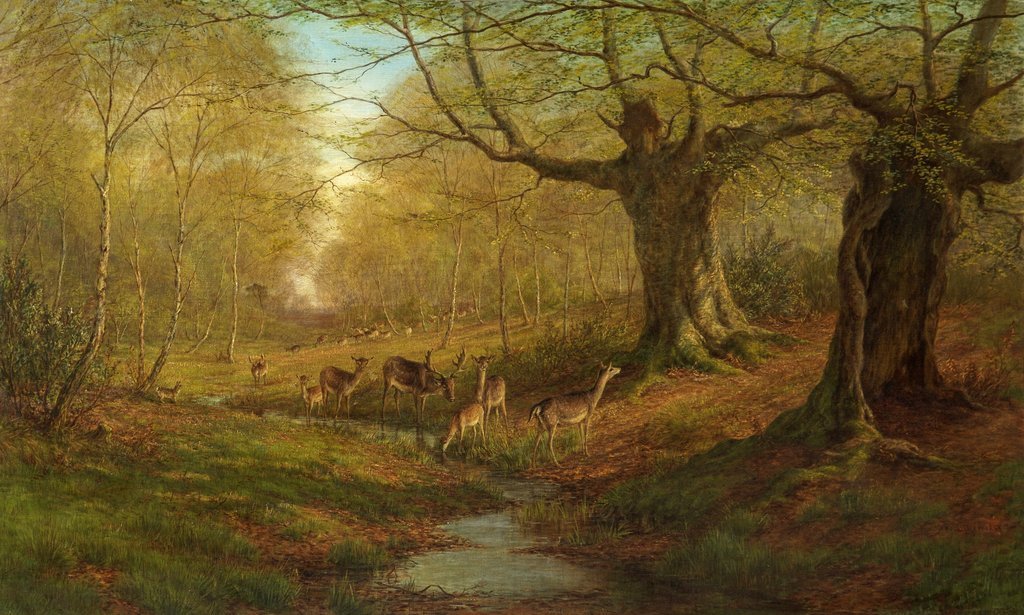
I have a friend on Facebook who often posts art that inspires her.
Beautiful classic landscapes from prominent artists with the occasional beautiful photo.
I have taken it upon myself to just tweak these artworks to make them a bit more palatable to my tastes.
This is what I've been doing.


Photo Hydrangeas in the Azores


Henri Jules Geoffroy Nursury School 1853


Email Claus Summer Morning 1896


Henri Biva From Waters Edge 1905


F. Pons Arnau" Eating Fruit" Circa 1920


Rene Milot "Anguished"


Photo Minot in His Garden


Ivan Shishkin "Forest" 1897